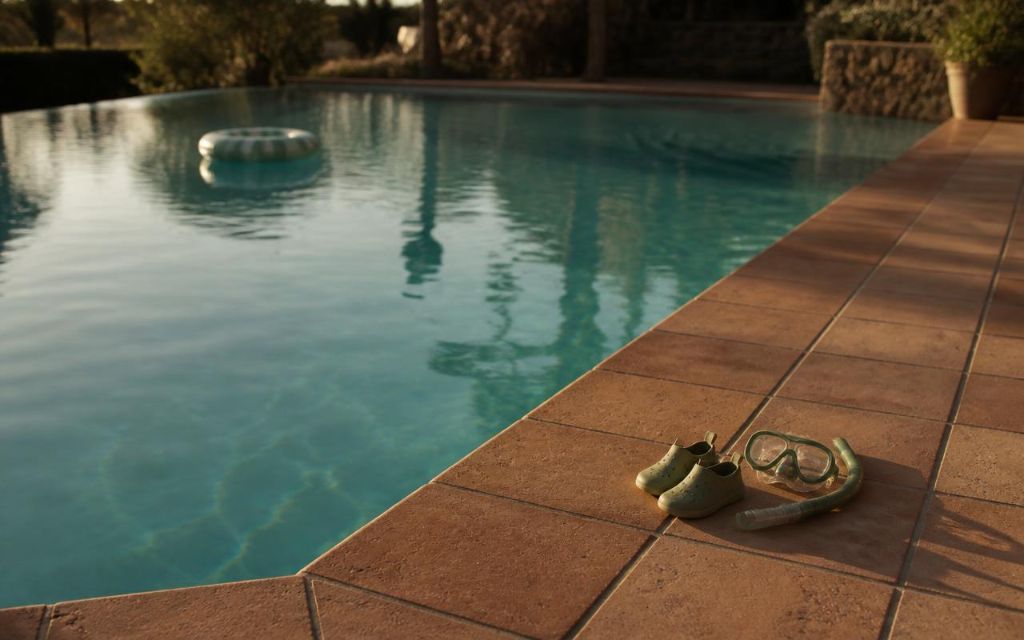
Drowning is the number one cause of accidental death for children ages 1 to 4 in the United States — ahead of car crashes, ahead of poisoning, ahead of everything. And it almost never looks like the movies. There is no splashing, no shouting, no waving of arms. A child slips under and it is silent, often in under 30 seconds, frequently within a few feet of an adult who never heard a thing.
That silence is why watching is not enough, and why the National Drowning Prevention Alliance (NDPA) does not talk about a single solution. It talks about layers. No one layer is perfect; any one of them can fail. But stacked together, the layers cover each other’s gaps — and the research shows layered protection can reduce drowning risk by up to 88%.
Here are the five layers, in NDPA’s order, translated into what actually to do and buy at home.
Layer 1 — Barriers (the fence is the foundation)
The single most effective physical measure is a four-sided isolation fence at least four feet tall that separates the pool from the house and yard, with a self-closing, self-latching gate that opens outward and latches out of a child’s reach. “Four-sided” matters: a fence that uses the house as one side leaves the back door as an open path to the water. The CDC and AAP both cite four-sided fencing as reducing drowning risk by roughly half on its own.
Layer 2 — Alarms (catch the gap the fence leaves)
Fences get propped open. Gates get left ajar. Alarms are the layer that catches those human failures. There are two kinds, and NDPA recommends both: door and gate alarms that sound the instant a path to the pool opens, and a pool surface alarm that detects when anything enters the water. The goal of the gate alarm is to catch the child before the water; the pool alarm is the last line if they get past everything else.
Recommended · Layer 2, the alarm layer
The two alarms NDPA recommends together
Gate alarms catch the child before the water; the pool alarm is the final line of defense if they get past the fence.
Layer 3 — Supervision (the “Water Watcher”)
Around any open water, one adult should be the designated Water Watcher — not reading, not scrolling, not making conversation with their back to the pool, but actively watching, within arm’s reach of the youngest swimmers. NDPA recommends passing a physical “Water Watcher” tag or card between adults so responsibility is never ambiguous. “I thought you were watching” is a sentence that appears in far too many case reports. Supervision fails not because adults don’t care but because responsibility diffuses when everyone assumes someone else has it.
Most fatal drownings happen when the child was “supposed” to be supervised — the failure is diffusion of responsibility, not absence of love.
Layer 4 — Life jackets (real ones, not toys)
This is the layer parents get most wrong. Water wings, floaties, and inflatable rings are toys, not safety devices — they can deflate, slip off, or flip a child face-down, and they teach a dangerous false confidence. The only water flotation that counts as protection is a U.S. Coast Guard-approved life jacket, sized to the child’s weight, worn any time they’re near open water or on a boat.
Recommended · Layer 4, real flotation
USCG-approved life jackets, sized by weight
Water wings and inflatables are not substitutes. These are actual Coast Guard-approved safety devices.
Get the free Family Safety Checklist
A printable Water Watcher card, the full 5-layer setup, and a room-by-room home audit — seven pages, no fluff.
No spam. Unsubscribe anytime.
Layer 5 — Swim skills & CPR (the human layers)
The final two layers are about people, not products. The AAP supports formal swim lessons for most children starting around age one, which meaningfully lowers drowning risk — though it never makes a young child “drown-proof,” and it does not replace any barrier or alarm. And every caregiver should learn CPR. When a child is pulled from the water, the minutes before EMS arrives are the ones that decide the outcome; a caregiver who can start CPR immediately dramatically improves the odds. The American Red Cross offers courses in almost every community.
How to build all five this month
- This week: Add door/gate alarms and a pool surface alarm — the fastest layer to install. Buy correctly sized USCG life jackets.
- This month: Verify your fence is four-sided with a self-latching gate; fix any gaps. Print a Water Watcher card and brief everyone who supervises.
- This season: Enroll in swim lessons and a CPR class.
No single layer would have saved every child. Together, they save most of them. Build all five.