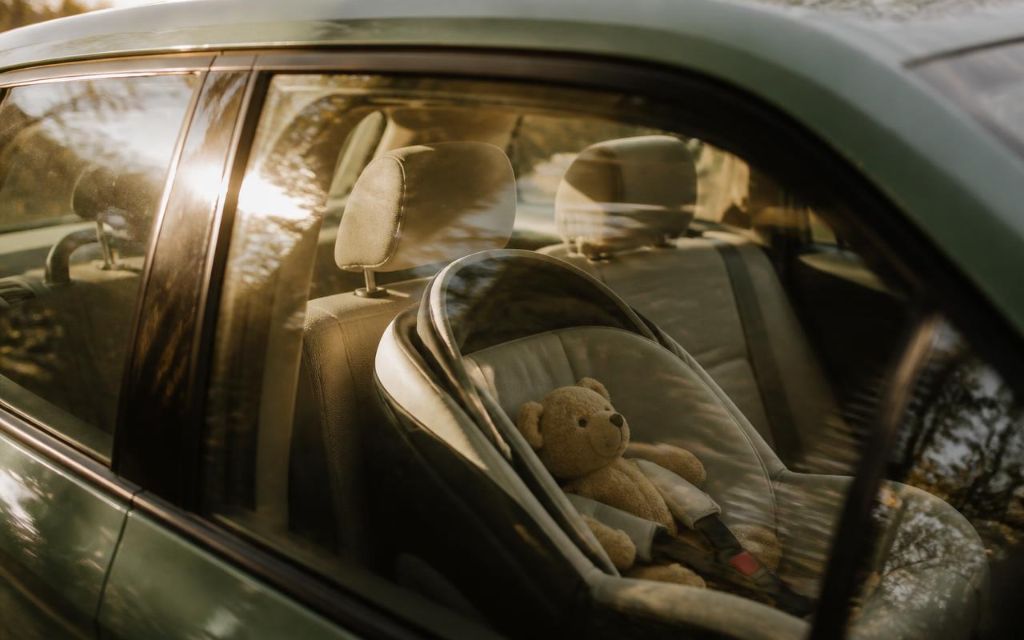
There is a sentence that nearly every parent has said, out loud or to themselves, about the families in the news: “I would never forget my child in the car.” It is said with total sincerity. It is also the single most dangerous belief a parent can hold, because it is the exact belief held by almost every parent it later happens to.
Since 1998, more than 1,000 children in the United States have died of vehicular heatstroke — an average of around 37 per year, roughly one every ten days during the warm months. According to the National Safety Council and the tracking maintained by Kids and Car Safety, the majority of these deaths were not caused by negligence in any ordinary sense of the word. In more than half of cases, the caregiver simply forgot the child was in the car.
Among the people this has happened to: a pediatric dentist. A postal worker. A NASA engineer. A schoolteacher. A police officer. A social worker whose entire job was child welfare. These are not careless people. They are people whose brains did exactly what human brains do under the right — or rather, the wrong — set of conditions.
Why it happens to good parents
The research that explains this best comes from Dr. David Diamond, a professor of psychology and molecular pharmacology at the University of South Florida who has studied these cases for two decades. His conclusion is uncomfortable but consistent: forgetting a child in a car is not a failure of love or attention. It is a failure of prospective memory — the system your brain uses to remember to do something in the future.
Diamond describes a competition inside the brain between two memory systems. One is the habit memory system — the basal ganglia — which runs automatic routines you’ve done a thousand times: the drive to work, the turn into the parking lot, the walk to your desk. The other is prospective memory — the hippocampus and prefrontal cortex — which holds your intentions, like “drop the baby at daycare on the way in.”
When you are sleep-deprived, stressed, running late, or your routine has changed, the habit system can quietly override the prospective one. The brain executes the familiar autopilot drive and, catastrophically, suppresses the competing memory that today was different. Diamond has documented that in this state, a parent can have a complete and confident false memory of having dropped the child off — while the child sleeps silently in a rear-facing seat behind them.
The parent isn’t choosing to forget. The brain is confidently reporting that a task was completed when it wasn’t.
Three factors show up again and again in the case files: a change in routine (the other parent usually does drop-off), a quiet, rear-facing child (often asleep, out of the driver’s line of sight), and stress or sleep deprivation — the ordinary condition of parenting a young child. Cars also heat with terrifying speed: on a 90°F day, the interior can exceed 130°F within 30 minutes, and a child’s body temperature rises three to five times faster than an adult’s.
The two things that don’t work
Before we get to what does work, it’s worth naming the two “solutions” that fail. The first is willpower — “I’ll just be more careful.” Willpower is precisely the faculty that fails under stress, so a plan that depends on it is a plan that depends on the failure not happening. The second is blame. Treating these deaths as moral failures of bad parents is not only cruel; it actively prevents good parents from taking the one step that protects them, because they don’t believe they belong to the at-risk group. Everyone does.
What actually works: build a system, not a resolution
The strategy that pediatric safety researchers and NHTSA endorse is not “try harder.” It’s to build an external system that doesn’t rely on memory at all — because your memory is the component that fails. There are three layers, and they stack.
Layer 1 — The physical cue (the “look before you lock” habit)
Put something you cannot leave the car without — your phone, your work badge, your left shoe, your bag — in the back seat next to the car seat, every single time. When you reach for it, you see the child. NHTSA’s longstanding public campaign is built on this exact principle: park, look, lock. A visible reminder sticker on the dash reinforces the cue.
Recommended · The habit layer
Make the habit visible
The 5-second habit is free. A set of dashboard reminder stickers makes it automatic — a physical cue that catches your eye every time you park.
Layer 2 — The sensor alarm (a backup for the brain)
A habit is good; a habit plus a device that doesn’t get tired is far better. A car seat sensor pad detects when a child is in the seat and sounds an alarm if you walk away from the car with the child still buckled. It requires no wiring and no app — it simply refuses to let the mistake go unnoticed.
Recommended · The everyday backup
The easiest layer to add today
A sensor pad plus alarm unit that alerts you if you walk away with a child in the seat. No install, no subscription.
Layer 3 — The wired reminder system (the strongest layer)
For families who want the most robust protection, a hard-wired back-seat reminder ties into the vehicle and prompts you to check the back seat every time you switch off the engine. It cannot be forgotten, unplugged, or run out of battery. It is the layer that turns “I hope I remember” into “the car remembers for me.”
Recommended · The strongest layer
A backup that can’t be forgotten
A professionally installed, hard-wired reminder that prompts a back-seat check every time the engine turns off.
Get the free Family Safety Checklist
The exact “look before you lock” routine, plus the daycare call-policy language that adds a fourth layer of protection. Seven pages, no fluff.
No spam. Unsubscribe anytime.
The fourth layer: your daycare’s call policy
Kids and Car Safety recommends one more free step that has saved lives: ask your childcare provider to call you within a set window (say, ten minutes) if your child does not arrive as scheduled, and to treat a no-show as an emergency, not an assumption that you kept the child home. Many centers already do this. The ones that don’t will start if a parent asks. That single phone call is the difference between a scare and a tragedy.
If you take one thing from this
The families this happens to are not a different kind of family than yours. They loved their children exactly as much as you love yours. What separated the near-misses from the tragedies was almost never a bigger supply of love or attention — it was a system that didn’t depend on either. Put your phone in the back seat. Add a sensor. Ask your daycare to call. Do it before you believe you need to, because the belief that you don’t is the risk.